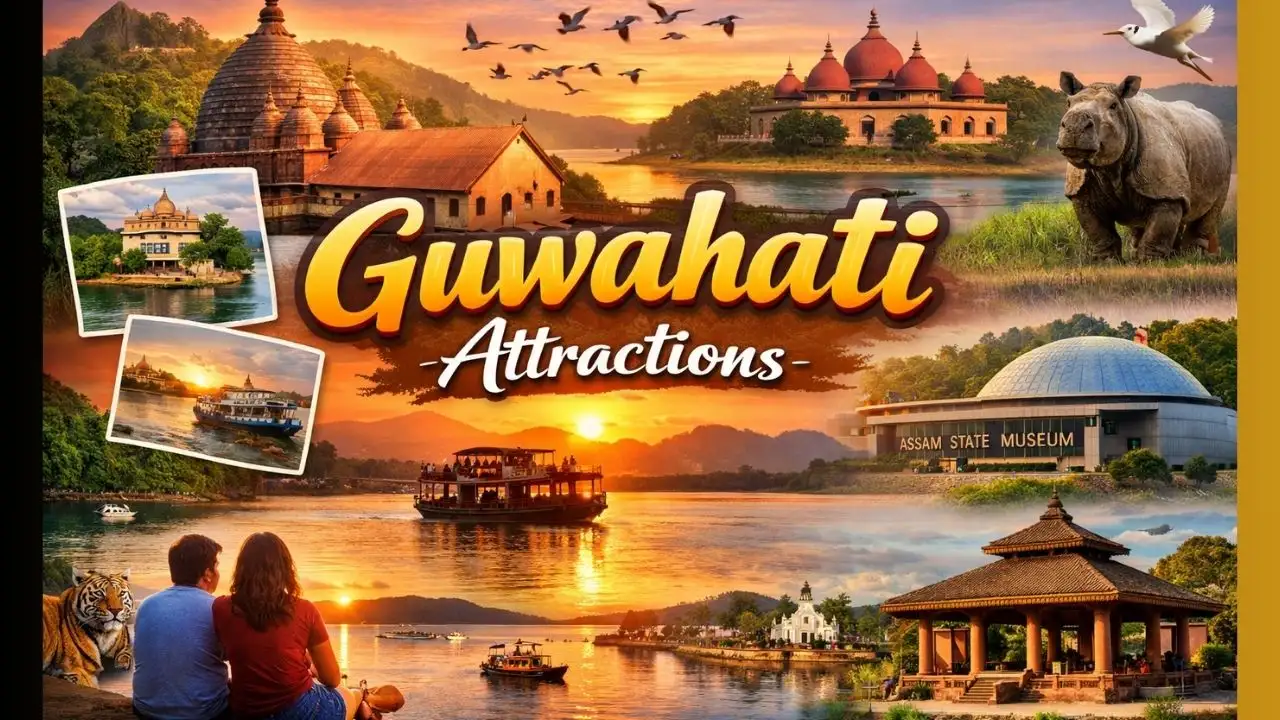
Guwahati is the true gateway to Northeast India and one of the most culturally layered cities in the region. Set along the wide Brahmaputra River and framed by rolling hills, the city blends ancient temples, living traditions, wildlife zones, lakes, and fast-growing urban spaces. Travelers often pass through Guwahati on the way to Meghalaya, Kaziranga, or Arunachal Pradesh, but the city itself deserves real time and attention.
What makes Guwahati special is its range. You can start your morning at a centuries-old hilltop temple, spend midday in a museum or cultural complex, walk beside a lake at sunset, and end the day on a river cruise. Connectivity is strong through air, rail, and highways, which makes trip planning simple for both domestic and international visitors.
Tourism facilities have also improved in recent years. Riverfront areas are more organized, parks are better maintained, and cultural centers are more visitor-friendly. Whether you enjoy spirituality, photography, birdwatching, heritage walks, or relaxed city experiences, Guwahati gives you enough variety for a rich multi-day itinerary.
This detailed guide covers the most visited Guwahati attractions, how to plan them smartly, and which places are best for couples, nature lovers, and culture-focused travelers.

Top Guwahati Attractions List You Should Not Miss
If you want a reliable, experience-tested list of places to visit in Guwahati, start here. These attractions consistently appear at the top of traveler plans because they combine cultural importance, accessibility, and visitor experience.
Kamakhya Temple sits at the top of the list for a reason. Located on Nilachal Hill, it is one of the most revered Shakti Peethas in India. The temple draws pilgrims throughout the year, with the Ambubachi Mela period seeing especially heavy footfall. Beyond religious value, the hilltop views over the Brahmaputra and city are worth the climb.
Umananda Temple and Peacock Island offer a very different temple experience. You reach the island by ferry, which already makes the visit memorable. The small Shiva temple here is peaceful, and the river views are wide and open. It is one of the most photographed spots in Guwahati.
Assam State Museum is essential if you want cultural context. The galleries cover tribal heritage, sculptures, manuscripts, textiles, and regional history. It helps visitors understand Assam beyond surface sightseeing.
Srimanta Sankardev Kalakshetra works as a cultural campus rather than just a museum. Traditional architecture, performance spaces, exhibitions, and libraries sit within landscaped grounds. It is one of the best places to see Assamese identity presented in one place.
Navagraha Temple is known for its planetary shrines and elevated location. It is less crowded than Kamakhya and gives wide city views, which photographers appreciate.
Basistha Temple and Ashram combine religion with nature. Surrounded by forest patches and streams, it feels removed from city noise.
Add Nehru Park, Atal Udyan, and Shraddhanjali Kanan for green city breaks, and your core Guwahati attraction list becomes both balanced and practical.
Guwahati Attractions List Details
| No. | Place to Visit in Guwahati | Type | Location | Why Travelers Choose It |
|---|---|---|---|---|
| 1 | Kamakhya Temple | Spiritual / Heritage | Nilachal Hill | Revered Shakti Peetha, major pilgrimage site, panoramic Brahmaputra views |
| 2 | Umananda Temple & Peacock Island | Spiritual / River Island | Brahmaputra River | Ferry access, peaceful Shiva temple, iconic photo spot |
| 3 | Assam State Museum | Museum / Culture | Central Guwahati | Tribal heritage, manuscripts, sculptures, cultural history |
| 4 | Srimanta Sankardev Kalakshetra | Cultural Complex | Panjabari | Assamese culture campus with museums and traditional architecture |
| 5 | Navagraha Temple | Spiritual | Chitrachal Hill | Planetary shrines and elevated city viewpoints |
| 6 | Basistha Temple & Ashram | Spiritual / Nature | Basistha Area | Shiva temple with forest setting and natural streams |
| 7 | Nehru Park | Urban Park | Panbazar | Sculptures, lawns, walking space in city center |
| 8 | Atal Udyan | Urban Park | Bharalumukh | Riverside green park for relaxation |
| 9 | Shraddhanjali Kanan | Garden / Park | Zoo Road Area | Landscaped garden, ponds, picnic-friendly space |
Guwahati Attractions Map and Smart Route Planning
A good Guwahati trip becomes much smoother when you understand how the attractions are spread across the city. The layout is not random. Several key spots cluster together, which helps you group visits and save time.
Central Guwahati is where many urban attractions sit close to each other. Assam State Museum, Nehru Park, Dighali Pukhuri Lake, and the planetarium area fall within this zone. This makes it perfect for a walking and short-drive sightseeing day. Cafes, markets, and transport options are easily available here.
Riverfront and Brahmaputra belt form another important strip. Ferry ghats near Fancy Bazaar connect visitors to Umananda Island and river cruises. Sunset visits work best here. The light over the water changes quickly, and evening boat rides are among the most recommended Guwahati experiences.
Nilachal Hill and nearby heights cover Kamakhya Temple and hidden viewpoints around it. Plan this as a dedicated half-day block, especially during festival periods when queues grow longer. Early morning visits are smoother and cooler.
Cultural and educational stretch includes Srimanta Sankardev Kalakshetra and nearby institutions. Roads here are broader and less congested compared to old market zones, making it easier to combine multiple stops.
Outer edge nature zones like Dipor Bil and Basistha sit toward the city’s edges. These are better scheduled as morning trips when bird activity is higher and traffic lighter.
A practical route many travelers follow is simple: start central, move uphill to temple circuits, head outward for nature spots, and return to the riverfront for evening views or a cruise. That structure keeps travel time under control and energy balanced.
Guwahati Attractions Map in Details
| Zone / Area | Key Attractions Included | Visit Style | Best Time to Visit |
|---|---|---|---|
| Central Guwahati | Assam State Museum, Nehru Park, Dighali Pukhuri Lake, Planetarium Area | Walking + Short Drive | Morning to Afternoon |
| Riverfront & Brahmaputra Belt | Fancy Bazaar Ghats, Ferry Points, Umananda Island, River Cruises | Ferry + Leisure Walk | Sunset & Evening |
| Nilachal Hill Zone | Kamakhya Temple, Hill Viewpoints | Hill Visit + Temple Circuit | Early Morning |
| Cultural & Educational Stretch | Srimanta Sankardev Kalakshetra, Cultural Institutions | Campus Walk + Museum Visits | Late Morning to Afternoon |
| Outer Edge Nature Zones | Dipor Bil, Basistha Temple & Ashram | Nature Trip + Light Exploration | Early Morning |
Guwahati Attractions for Couples and Relaxed Travelers
Guwahati is often labeled as a spiritual and transit city, but couples quickly discover its softer side. There are enough calm, scenic, and low-noise places here to build meaningful shared experiences without rushing.
Nehru Park is one of the most couple-friendly spaces in the city. Sculptures, lawns, and walking paths create a relaxed setting. Early mornings and late afternoons are best. The musical fountain shows draw small crowds but still keep a pleasant atmosphere.
Dighali Pukhuri Lake sits right in the city yet feels removed from traffic. The paved edges, tree lines, and boating options create an easygoing stop. Sunset reflections here are excellent for photos and quiet conversation.
Brahmaputra ferry rides and river cruises are consistently rated as romantic experiences. The slow movement, open sky, and changing light create a shared moment that does not feel staged or artificial.
Shraddhanjali Kanan Park, near the Assam State Zoo area, offers gardens, ponds, and picnic corners. It works well for half-day outings where you want space and greenery rather than crowds.
Kalakshetra cultural complex may not sound like a date spot at first, but couples who enjoy culture, architecture, and performances often find it rewarding. Walking through exhibits and open courtyards together creates a different kind of connection.
Add café stops around central Guwahati and lakeside areas, and you get a relaxed, conversation-friendly plan instead of a checklist tour.
Guwahati Attractions for Couples in Details
| Place | Type | Best Time to Visit | Couple-Friendly Features |
|---|---|---|---|
| Nehru Park | Urban Park | Early Morning, Late Afternoon | Lawns, sculptures, walking paths, musical fountain |
| Dighali Pukhuri Lake | City Lake | Sunset | Tree-lined paths, boating, paved edges |
| Brahmaputra Ferry & River Cruise | River Experience | Sunset, Evening | Boat rides, open river views, slow travel |
| Shraddhanjali Kanan Park | Garden / Park | Morning to Afternoon | Gardens, ponds, picnic areas |
| Srimanta Sankardev Kalakshetra | Cultural Complex | Late Morning to Evening | Museums, architecture, open courtyards |
| Central Guwahati Cafés & Lakeside Spots | Café / Leisure | Evening | Cozy seating, food stops, relaxed vibe |
Unique Places to Visit in Guwahati Beyond the Usual List
Some Guwahati attractions stand out not because they are the biggest, but because they offer experiences you do not easily find elsewhere. These are the places that give your trip character.
Umananda Island is unique by geography alone. A small inhabited river island with a historic temple is not something most cities can offer. The ferry ride is short but adds texture to the visit.
Dipor Bil (Deepor Beel) is not a decorative lake but a Ramsar-recognized wetland ecosystem. During migratory bird season, it becomes a serious birdwatching zone. You are not just strolling through landscaping here. You are stepping into an active habitat.
Guwahati Planetarium and science upgrades have made the site more interactive for students and families. New immersive theatre formats and observatory features are turning it into a stronger educational attraction.
Kamakhya Hill trails and side viewpoints are often missed by first-time visitors who only see the main temple. Light hikes around the hill reveal quiet outlook points over the Brahmaputra and city spread.
Local river ghats near market areas show daily river life -ferries, rituals, trade, and food stalls. These are not polished tourist zones, but they are deeply real.
Travelers who mix these unique spots with famous temples and parks usually leave with a fuller sense of Guwahati, not just postcard memories.
Unique Places to Visit in Guwahati in Details
| Place | Category | What Makes It Unique | Visitor Experience | Best For |
|---|---|---|---|---|
| Umananda Island | River Island / Temple | Small inhabited island temple in the Brahmaputra | Short ferry ride plus historic shrine visit | Unique geography and photo spots |
| Dipor Bil (Deepor Beel) | Wetland / Nature | Ramsar-recognized wetland ecosystem | Migratory birds and real habitat viewing | Birdwatchers and nature lovers |
| Guwahati Planetarium | Science / Education | Upgraded immersive theatre and observatory features | Interactive science and sky shows | Students and families |
| Kamakhya Hill Trails & Viewpoints | Hill / Viewpoints | Hidden side trails beyond the main temple | Light hikes with wide river and city views | Explorers and photographers |
| Local River Ghats | Cultural / Riverfront | Active daily river life near markets | Ferries, rituals, food stalls, trade scenes | Culture seekers and street photographers |
Natural Places to Visit in Guwahati and Nearby
Nature is not far from you in Guwahati. Even within city limits, wetlands, lakes, and forest patches create breathing space. Step slightly outside, and the landscape opens quickly.
Dipor Bil remains the top natural attraction. Winter brings migratory birds, while mornings offer the best light and activity. Carry binoculars if you enjoy birding. Local guides sometimes help identify species.
Silsako Lake represents Guwahati’s urban wetland conservation effort. It is less touristy but important environmentally. Visitors who like quieter, less commercial spaces appreciate it.
Basistha Temple surroundings include streams and green cover, giving you both spiritual and nature elements in one visit. After temple darshan, walking along the water channels is calming.
Chandubi Lake, about 60 to 70 km away, makes a strong day trip. Formed after an old earthquake event, it sits surrounded by forest and villages. Boating and simple stays are available, and the area feels far removed from city rhythm.
Brahmaputra riverbanks themselves count as natural attractions. Sunrise and sunset walks along open stretches give you a sense of the river’s scale and power.
A smart plan is to pair one city day with one nature morning. That contrast shows you why Guwahati works as both an urban hub and a nature gateway.
Natural Places to Visit in Guwahati in Details
| Natural Place | Type | Key Features | Best Time to Visit |
|---|---|---|---|
| Dipor Bil (Deepor Beel) | Wetland / Bird Sanctuary | Migratory birds, large wetland habitat, guided birding | Winter mornings |
| Silsako Lake | Urban Wetland | Conservation-focused lake, quiet surroundings | Morning |
| Basistha Temple Surroundings | Forest / Stream Area | Temple, flowing streams, green cover | Morning to Afternoon |
| Chandubi Lake | Forest Lake / Day Trip | Natural lake, boating, village setting | Day trip, October to March |
| Brahmaputra Riverbanks | Riverfront Nature | Wide river views, open stretches, walking spots | Sunrise and Sunset |
Guwahati Attractions F.A.Q.
– What are the top must-visit attractions in Guwahati?
The most visited attractions in Guwahati include Kamakhya Temple, Umananda Island, Assam State Museum, Srimanta Sankardev Kalakshetra, Dipor Bil wetland, and Navagraha Temple. River cruises on the Brahmaputra and city parks like Nehru Park are also popular with travelers.
– How many days are enough to explore Guwahati attractions?
Two to three days are enough to comfortably explore major Guwahati attractions. One day can cover central city spots and museums, another for temple and hill circuits, and one for nature areas like Dipor Bil or a river cruise experience.
– What is the best time to visit Guwahati for sightseeing?
The best time to visit Guwahati is from October to March. The weather stays cooler and clearer, which is better for temple visits, river activities, and birdwatching at Dipor Bil. Early mornings and late afternoons work best for most outdoor attractions.
– Are Guwahati attractions suitable for couples and families?
Yes. Guwahati has attractions for both couples and families. Couples often enjoy river cruises, lakeside walks, and gardens like Shraddhanjali Kanan, while families prefer the planetarium, museums, parks, and cultural complexes.
– Is Guwahati mainly a spiritual destination or does it offer more?
Guwahati is known for major temples, but it offers much more than spiritual tourism. Visitors can explore wetlands, cultural centers, museums, parks, river islands, and local markets. It works well for culture trips, nature outings, and relaxed city breaks.
Conclusion: Why Guwahati Is Worth More Than a Stopover
Many travelers first treat Guwahati as a transit point. Those who stay longer change their opinion. The city offers spiritual landmarks, cultural depth, river experiences, green parks, wetlands, and thoughtful couple-friendly spaces all within manageable travel distance.
Plan it well, move by zones, mix temples with lakes and culture with river time. Do that, and Guwahati stops being a gateway and becomes a destination in its own right.
Also read:-

AG is a content writer and researcher at Assam Guwahati, focusing on government schemes, Assam-related updates, education, finance, and public welfare programs. Through assamguwahati.com, he publishes informative articles, guides, and scheme updates to help readers understand benefits, eligibility requirements, and application procedures.